Updates ·
Two professions, and dropping one costs
Two primary professions per character, the secondaries free. Drop a primary and its skill goes to zero. How the economy falls out of that one rule.
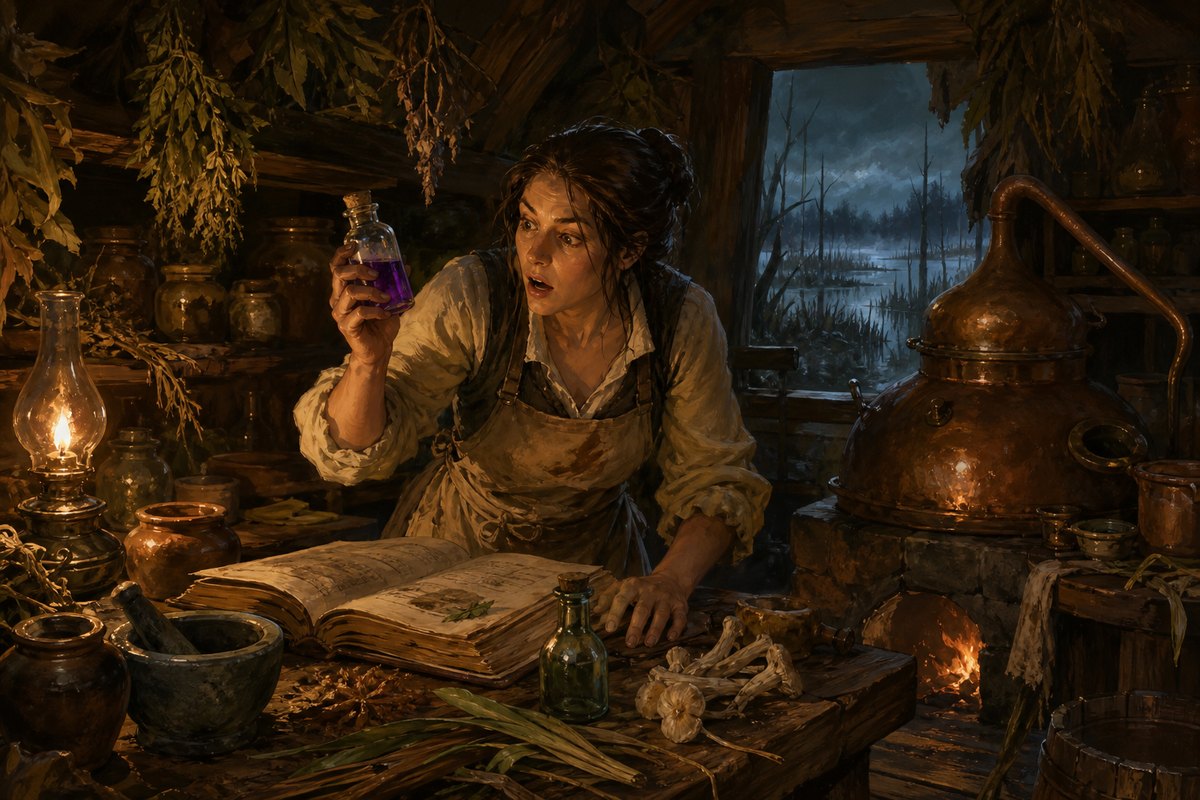
The best thing a profession system ever did for me was make me talk to a stranger. You needed something you could not make, someone in the zone could, and five minutes later you had a trade and a name. Most of the people I remember from 2005 I met over ore.
Every character picks two primary professions and gets the three secondaries, Fishing, Cooking and First Aid, free. Drop a primary and its skill goes to zero. No refund; you can start over later. That is harsh and I am keeping it. A choice you can undo for free is no choice.
Three gatherers, five crafts. Mining feeds Blacksmithing, Herbalism feeds Alchemy, Skinning feeds Leatherworking. Tailoring runs on cloth that humanoid mobs drop, Enchanting on gear you take apart. Two slots and those eight are the whole economy. A pair like Mining and Blacksmithing needs nobody and levels slowly. Two crafts gear you faster and make you buy from everyone. Two gatherers make no gear and a lot of money. Loosen the two-slot limit and the economy goes with it.
Skill runs from 1 to 500 in four ranks: Apprentice to 75, Journeyman to 175, Craftsman to 325, Master to 500. The first is short so you have made something on your first evening; the last is long so Master Blacksmith means the work was done. Each rank also needs a character level, 1, 10, 20 and 35, but the real gate is the world: a Master ore seam is in a Master place, and a level 12 miner cannot survive the Wolfsteeth to reach it.
Every recipe and node has a required skill, shown as a colour. Orange is a guaranteed skill point, yellow 75%, green 25%, grey nothing, and grey also means no character XP. A recipe stays useful for about 120 points and then retires itself.
Thirteen ores and twenty-four herbs, spaced so there is always an orange node from skill 1 to 460. Each shows up in about three zones: copper near the surface in six starting zones, bog iron lifted out of marsh water in the Sallows and the Reedlands, and at the end Riftheart, which hums at a pitch two out of three people cannot hear.
Alchemy has 116 recipes. Forty-five come from a trainer, enough to reach 500 with good potions. Thirty-eight are found: drops, a rare vendor, a quest reward. Thirty-three you discover by crafting: every craft rolls, two to five percent for most and under one for the ones worth bragging about, and what you can find depends on where you stand. Brew in the Sallows and you might turn up a fenfolk tincture that nobody brewing the same potion in Elderwood will see. The game tells you in the voice of someone who has been watching: "You have been steeping this wrong."
Specialising at max skill changes how long your potions last, how many you get and what you can read, never how strong they are. I measured a game where specialisation added 44% effect, and that is the point where it stops being a choice.
The two-slot wipe is the rule I would most like to hear arguments about. I think it is right. I might be wrong.
In the preview today: all eleven professions exist, the colours work, and alchemy is the one craft you can practise end to end, trainers and discovery included.